
A label that looks great when applied may fail when exposed to changing temperatures. Understanding adhesive options and application conditions can help manufacturers prevent labeling problems and maintain a professional appearance.
Why Do Cold and Wet Bottle Labels Fail?
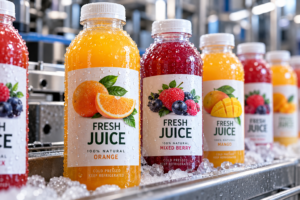 Refrigerated bottles often develop condensation when moved into warmer environments. This moisture can interfere with adhesive performance, especially when labels are applied to damp surfaces.
Common labeling problems include:
These issues can increase packaging waste, slow production, and affect how products look on store shelves.
Selecting the right combination of adhesive, label material, and application conditions helps reduce these risks.
What Adhesives Work Best for Cold and Wet Bottle Labels?
Not all beverage label adhesives perform the same way. The best option depends on bottle temperature, surface material, and moisture exposure.
Cold Temperature Adhesives
Cold temperature label adhesives are designed to bond at lower temperatures than standard adhesives.
They are useful for refrigerated juice, smoothies, and other beverages labeled after cooling. However, manufacturers should confirm the adhesive’s minimum application temperature before production.
Moisture-Resistant Adhesives
Moisture-resistant adhesives help labels remain attached when exposed to condensation, humidity, or occasional water contact.
These adhesives are often paired with waterproof bottle labels to support durability during refrigerated storage and handling.
Permanent Pressure-Sensitive Adhesives
Permanent pressure-sensitive adhesives create a lasting bond when applied with suitable pressure.
They are widely used in beverage packaging because they support efficient labeling processes. Some formulations also offer improved performance in cold or moisture-prone environments.
Why Does Bottle Material Matter?
Adhesive performance depends on the container surface as well as temperature.
Common beverage containers include:
Each surface has different properties that affect adhesion. An adhesive that works well on glass may not perform the same way on plastic.
Testing labels on actual containers helps manufacturers select the right adhesive before full production.
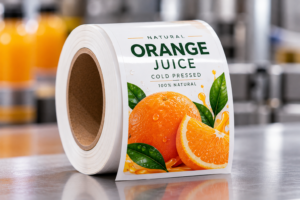 How to Choose Waterproof Bottle Labels
Waterproof bottle labels require more than a moisture-resistant adhesive. Label materials and protective finishes also influence performance.
For refrigerated beverage packaging, consider:
One important distinction is that applying labels to cold, dry bottles differs from applying them to wet bottles. Surface moisture can prevent proper adhesion, even when the finished label is designed to resist water.
Frequently Asked Questions
What adhesive works best for refrigerated juice bottles?
Cold temperature or moisture-resistant adhesives may be suitable, depending on the bottle material, application temperature, and storage conditions.
Can labels stick to bottles with condensation?
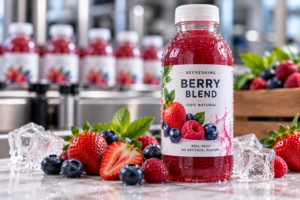 Some specialized adhesives can handle challenging moisture conditions. However, testing is essential because surface water can interfere with bonding.
Are waterproof labels suitable for refrigerated beverages?
Yes. Waterproof labels made with compatible films, adhesives, and protective finishes can help maintain durability during refrigeration and handling.
Find the Right Bottle Labels with Label Haus
Reliable cold and wet bottle labels help beverage manufacturers reduce peeling, improve packaging consistency, and maintain product appearance.
Choosing compatible adhesives, materials, and application methods can make a significant difference in long-term label performance.
Contact Label Haus to discuss adhesive and label options for juice bottles, refrigerated beverages, and moisture-prone packaging applications.